Elementary Curriculum ARED 6350S
In this course, I wrote a written response to a variety of resources. This sample writing is in response to a NAEA webinar, "Supporting Dual-Language Literacy in Art Education Practices" by Paula Liz.
In support of TAPS Standard 9: Professionalism
"The teacher exhibits a commitment to professional ethics and the school’s mission, participates in professional growth opportunities to support student learning, and contributes to the profession."
This written response demonstrates TAPS Standard 9, professionalism, by participating in ongoing professional growth activities based on identified areas for improvement. I was able to pursue growth by learning from new sources on how to improve my teaching practice.
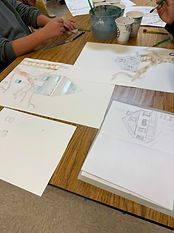
While assisting for eight weeks at a local elementary school, my partner and I identified a specific learning need in the classroom and created a case study on it. Based on our classroom observation, we chose to look into attention and distraction. We researched the topic and created a presentation with our findings.
In support of TAPS Standard 3: Instructional Strategies
"The teacher promotes student learning by using research-based instructional strategies relevant to the content to engage students in active learning and to facilitate the students’ acquisition of key knowledge and skills."
In support of TAPS Standard 4: Differentiated Instruction
"The teacher challenges and supports each student’s learning by providing appropriate content and developing skills which address individual learning differences."
The case study demonstrates TAPS Standard 3: instructional strategies by having us find a variety of research-based instructional strategies and resources, and developing higher order thinking through questioning and problem-solving. The case study demonstrates TAPS Standard 4: differentiated instruction by researching differentiated instructional content and finding alternative learning environment strategies to meet individual developmental needs.

While assisting at a local elementary school, my school partner and I also created a lesson to teach during class. We taught a lesson about incorporating nature into art to a 4th-grade and 5th-grade class.
In support of TAPS Standard 1: Professional Knowledge
"The teacher demonstrates an understanding of the curriculum, subject content, pedagogical knowledge, and the needs of students by providing relevant learning experience."
In support of TAPS Standard 2: Instructional Planning
"The teacher plans using state and local school district curricula and standards, effective strategies, resources, and data to address the differentiated needs of all students."
In support of TAPS Standard 3: Instructional Strategies
"The teacher promotes student learning by using research-based instructional strategies relevant to the content to engage students in active learning and to facilitate the students’ acquisition of key knowledge and skills."
Developing and teaching a lesson in a local school demonstrates TAPS Standard 1: professional knowledge by acquainting us with curriculum standards and key content elements. It also allows us to facilitate students' use of higher-level thinking skills, demonstrate our ability to link art content with other subject areas, and demonstrate our knowledge of art, exhibit pedagogical skills based on current research, show clear instruction goals, and display an understanding of the intellectual, social, emotional, and physical development of the age group.
Developing and teaching a lesson demonstrates TAPS Standard 2: instructional planning by having us develop clear lesson plans, plan instruction for content mastery and pacing, align and connect lesson objectives to state and school district curricula and standards, align to students' learning needs, and develop an appropriate lesson plan with the ability to adapt when needed.
Developing and teaching a lesson demonstrates TABS Standard 3: instructional strategies by engaging students in active learning, building on students' prior knowledge, consistently reinforcing learning goals, practicing the use of a variety of research-based instructional strategies, and communicating and showing material clearly.

In this course, I developed a unit plan for a 5th-grade class inspired by Contemporary Native American Art.
In support of TAPS Standard 1: Professional Knowledge
"The teacher demonstrates an understanding of the curriculum, subject content, pedagogical knowledge, and the needs of students by providing relevant learning experience."
In support of TAPS Standard 2: Instructional Planning
"The teacher plans using state and local school district curricula and standards, effective strategies, resources, and data to address the differentiated needs of all students."
In support of TAPS Standard 5: Assessment Strategies
"The teacher systematically chooses a variety of diagnostic, formative, and summative assessment strategies and instruments that are valid and appropriate for the content and student population."
Developing a unit plan demonstrates TAPS Standard 1: professional knowledge by acquainting us with curriculum standards and key content elements. It also allows us to facilitate students' use of higher-level thinking skills, demonstrate our ability to link art content with other subject areas, and demonstrate our knowledge of art, exhibit pedagogical skills based on current research, show clear instruction goals, and display an understanding of the intellectual, social, emotional, and physical development of the age group.
Developing a unit plan demonstrates TAPS Standard 2: instructional planning by having us develop clear lesson plans, plan instruction for content mastery and pacing, align and connect lesson objectives to state and school district curricula and standards, align to students' learning needs, and develop an appropriate lesson plan with the ability to adapt when needed.
Developing a unit plan demonstrates TAPS Standard 5: assessment strategies by aligning student assessments with the curriculum, varying assessment types to determine student needs and progress, and using assessment techniques that are appropriate for the students.

In this course, I created a curriculum map for a 5th-grade class spanning a full school year.
In support of TAPS Standard 1: Professional Knowledge
"The teacher demonstrates an understanding of the curriculum, subject content, pedagogical knowledge, and the needs of students by providing relevant learning experience."
In support of TAPS Standard 2: Instructional Planning
"The teacher plans using state and local school district curricula and standards, effective strategies, resources, and data to address the differentiated needs of all students."
In support of TAPS Standard 5: Assessment Strategies
"The teacher systematically chooses a variety of diagnostic, formative, and summative assessment strategies and instruments that are valid and appropriate for the content and student population."
Developing a curriculum map demonstrates TAPS Standard 1: professional knowledge by acquainting us with curriculum standards and key content elements. It also allows us to facilitate students' use of higher-level thinking skills, demonstrate our ability to link art content with other subject areas, and demonstrate our knowledge of art, exhibit pedagogical skills based on current research, show clear instruction goals, and display an understanding of the intellectual, social, emotional, and physical development of the age group.
Developing a curriculum map demonstrates TAPS Standard 2: instructional planning by having us develop clear lesson plans, plan instruction for content mastery and pacing, align and connect lesson objectives to state and school district curricula and standards, align to students' learning needs, and develop an appropriate lesson plan with the ability to adapt when needed.
Developing a curriculum map demonstrates TAPS Standard 5: assessment strategies by aligning student assessments with the curriculum, varying assessment types to determine student needs and progress, and using assessment techniques that are appropriate for the students
